EROSKI prevents the waste of more than 14,000 tonnes of food and reinforces its commitment to sustainability
- More than 12,141 tonnes are products intended for human consumption, equivalent to 48 million meals.
- These initiatives made it possible to use food equivalent to 26,610 families over six months.
- A total of 378 tonnes of food were donated to social organisations to meet the needs of people in vulnerable situations.
- EROSKI promotes the recovery of organic by-products and the donation of food for animal feed as part of a circular economy model that reduces environmental impact and reinforces sustainability.
As part of the 9th Week Against Food Waste led by AECOC, EROSKI reinforces its commitment to the fight against food waste after preventing the waste of more than 14,000 tonnes of food during the first half of the 2026 financial year.
In total, 12,141 tonnes are products intended for human consumption, equivalent to 48 million meals, estimated to be enough to feed 26,610 families for six months. This result is the outcome of a strategy that combines the sale of products at special discounts, donations to social organisations, collaboration with food recovery platforms and the optimisation of in-store management processes.
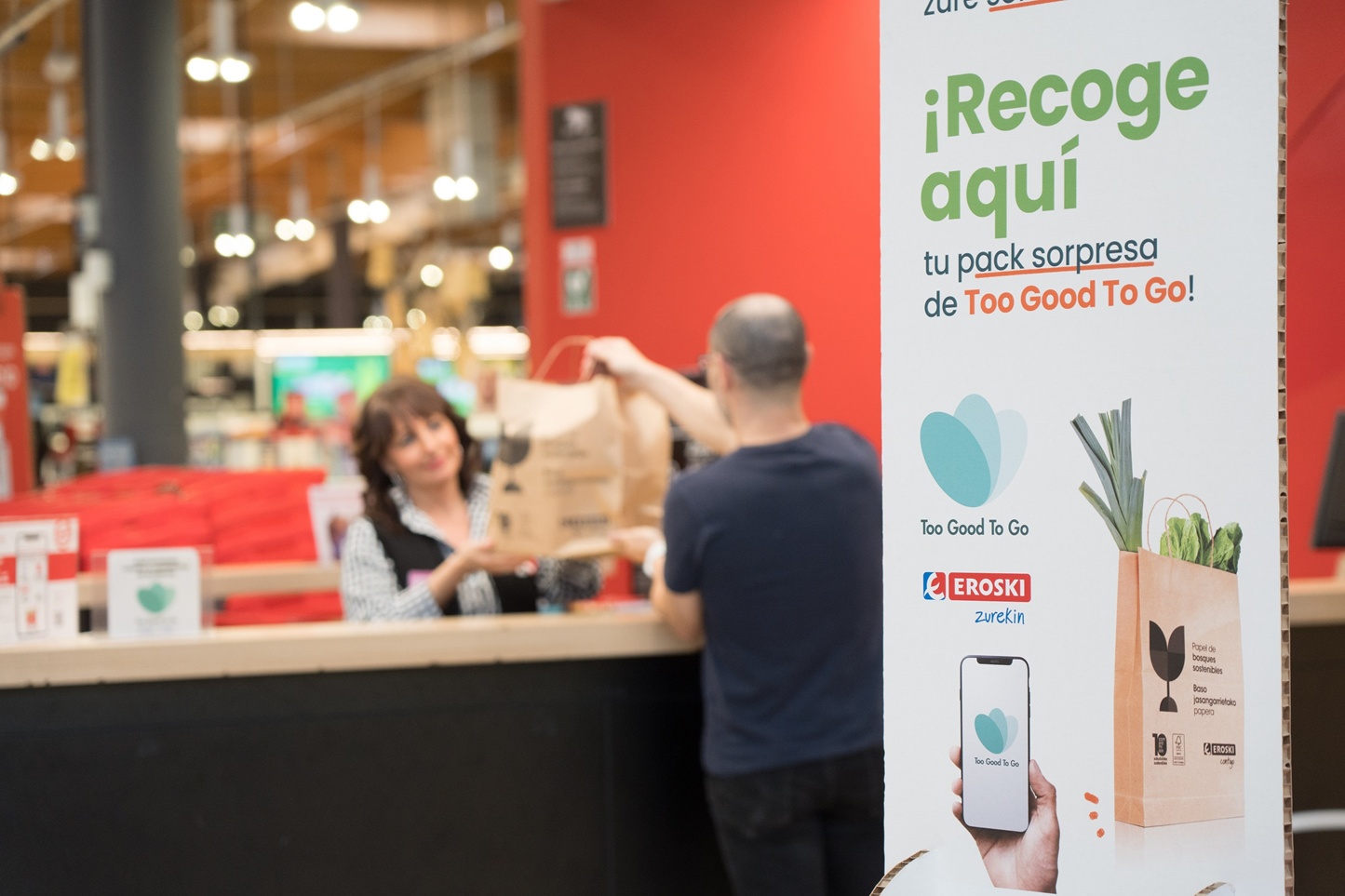
During the first six months of the financial year, EROSKI sold 11,546 tonnes of food at special discounts, making it available at more affordable prices and preventing it from going to waste. This initiative is complemented by its collaboration with Too Good To Go, through which 217,130 discounted product packages were distributed, giving customers an alternative way to make use of food in perfect condition for consumption.
The company also donated 378 tonnes of food to social organisations, helping to meet the food needs of people in vulnerable situations and reinforcing its commitment to the local community.
According to Cristina Rodríguez Domingo, Sustainability Manager at EROSKI Group: “At EROSKI, we work to make the most of every food product and to ensure that nothing fit for consumption goes to waste. The results for this first half of the year reflect the impact of a model that combines prevention, discounted sales, donations and collaboration with food recovery initiatives. At the same time, when a product can no longer be used for human consumption, we look for new ways to make use of it, such as animal feed or the recovery of by-products. In this way, we are moving towards a circular economy model that generates social and environmental value and allows us to keep building a more responsible and sustainable food chain.”
A comprehensive approach to food recovery
EROSKI’s strategy for tackling food waste spans the entire value chain and seeks to give products a second chance whenever possible. When food cannot be used for human consumption, the company works to find other ways of making use of it that help prevent it from becoming waste.
In this regard, during the first half of the 2026 financial year, EROSKI prevented the waste of 2,664 tonnes of products intended for animal feed. Of these, 15 tonnes of food were donated to zoos and animal welfare organisations, while 2,649 tonnes of organic by-products were used to manufacture animal feed and meal.
This recovery process allows these products to be reincorporated into other production processes and contributes to a circular economy model, reducing waste generation and the environmental impact associated with food waste.
Together, these actions reflect EROSKI’s commitment to a more responsible food model, one that addresses waste from an environmental, social and economic perspective and seeks to maximise the value of food and products throughout the entire chain.
These actions are part of EROSKI’s 5 Commitments to Health and Sustainability, a roadmap that guides its strategic decisions and whose main pillars include improving society’s diet, supporting the local community and protecting the environment.

